
Clinic WhatsApp Enquiries: An Administrative Appointment Follow-Up Workflow
Separate incoming WhatsApp messages from your clinic schedule by keeping general enquiries, slot requests, confirmed bookings, and desk check-ins in distinct stages.
Across dental practices and outpatient clinics, owners and receptionists frequently describe the same frustrating day at the desk. A treatment chair or consultation room is held for someone who asked for a slot on WhatsApp, other patients are turned away for that hour, and then the contact stops replying right as the appointment time arrives. Meanwhile, front desk staff spend hours chasing manual confirmations and take the blame when schedule gaps happen. Building a dependable clinic WhatsApp appointment follow-up workflow starts with separating chat messages from your actual clinic schedule.
Direct answer: Use WhatsApp to guide prospective patients toward a clear booking step in your clinic WhatsApp appointment follow-up process, not as a substitute for clinical assessment or your booking calendar. Keep general enquiries, slot requests, confirmed bookings, and attended visits as separate stages, and confirm bookings and check-ins from your front desk records rather than chat replies.
What an enquiry does and does not confirm
When a clinic runs paid campaigns or places a WhatsApp button on its website, the resulting click or message only shows how that person started the conversation. It does not prove which channel originally convinced them, and it does not mean a chair is booked. A prospective patient might message after seeing an ad, checking Google Maps, or getting a recommendation from a friend, so lead source records can be known, self-reported, inferred, or unknown.
Treating every inbound WhatsApp thread as a booked appointment creates immediate tension between marketing and reception. Campaign reports start counting raw chat threads as bookings, while the front desk is left sorting through unconfirmed time preferences, unanswered follow-ups, and last-minute schedule gaps. When ad lead counts and chair utilisation tell two different stories, the root cause is usually blurred stage definitions.
A proposed administrative handoff with named roles
A practical clinic enquiry workflow separates public service communication, front desk scheduling, and medical care.
Scroll sideways to see every column.
| State | Operational definition | Responsible role | Evidence source |
|---|---|---|---|
| Administrative enquiry | Inbound contact asking about published clinic services, opening hours, location, or standard fee ranges. | Marketing and front desk admin | Messaging inbox log and entrypoint record |
| Appointment request | Prospective patient asks for a preferred day or time slot; no chair or doctor time is reserved yet. | Clinic reception | Intake log awaiting calendar check |
| Confirmed booking | Specific slot checked against doctor availability and locked by reception in the clinic calendar. | Clinic reception | The clinic's booking calendar |
| Attended consultation | Patient arrives and checks in at the desk for the scheduled consultation or treatment. | Front desk and clinic operations | Check-in desk attendance record |
| Cancellation, reschedule, or unknown | Slot is released, moved to a new date, or left unconfirmed without guessing why the person went quiet. | Clinic reception | The clinic's booking calendar |
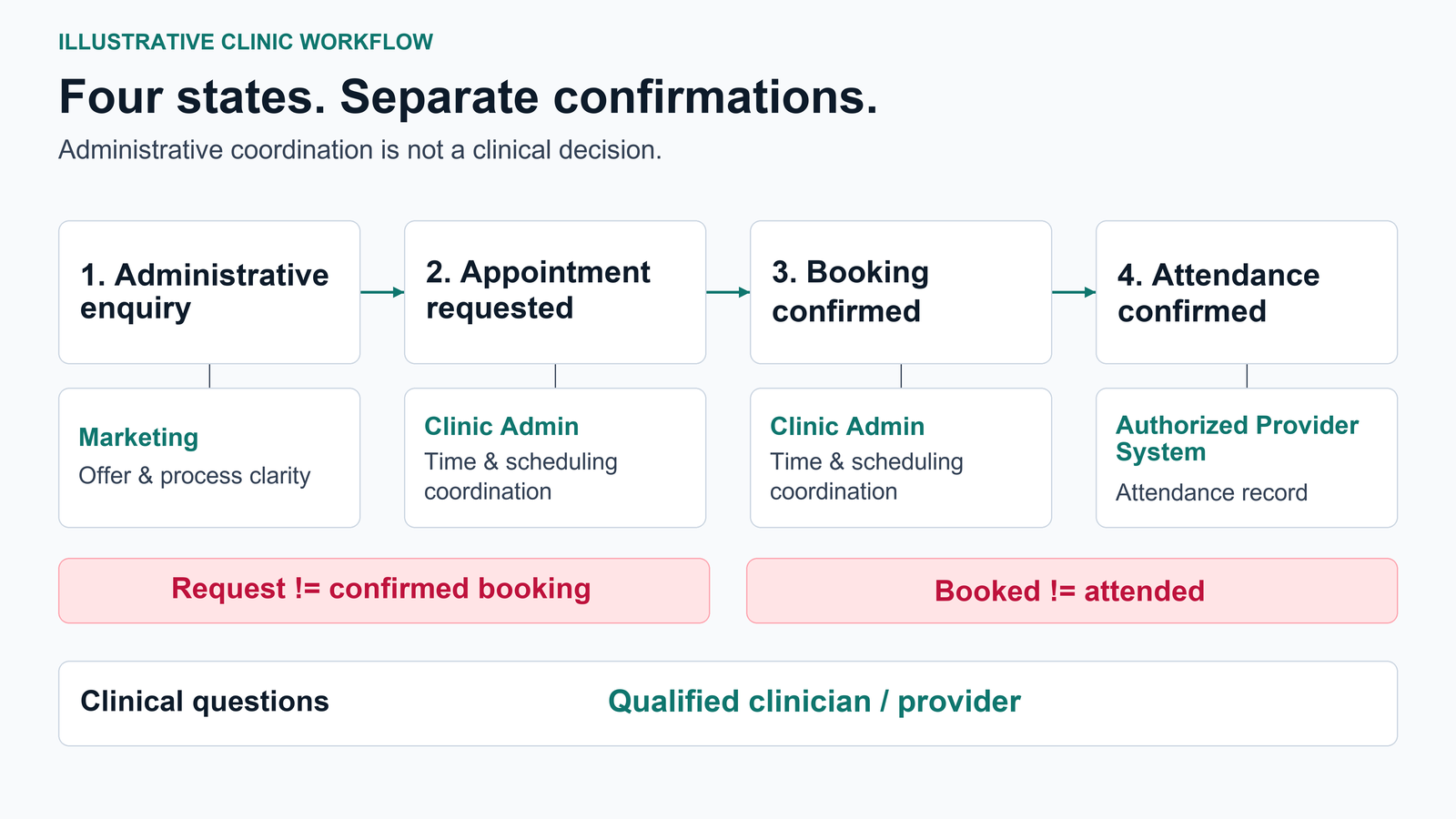
In this setup, marketing is responsible for setting clear expectations before the click happens. When campaigns on Meta Ads and the clinic's landing page clearly show opening hours, clinic location, and what details reception needs to check a slot, the front desk receives much cleaner enquiries.
Once the chat starts, reception checks calendar availability and explains how a slot is locked in, while any symptom question or medical concern goes straight to a doctor or nurse.
Booking and attendance need different evidence
One of the most common mistakes in a clinic appointment follow-up process is treating a friendly WhatsApp reply as proof of a confirmed booking or a completed visit.
Separating calendar bookings from desk check-ins protects both reception staff and clinic scheduling:
- A time request is not a locked slot: When someone asks for a Tuesday afternoon appointment, the chair stays open until reception checks doctor availability and locks the booking in the clinic's calendar.
- A locked slot is not an attended visit: A confirmed booking shows that time was reserved. Whether the consultation actually happened comes from the check-in desk record, not from someone replying "on my way" in chat.
- Silence is not automatically a lost patient: Keep cancellations, rescheduled appointments, and unconfirmed threads in separate buckets rather than guessing why someone stopped replying.
Keeping these records separate also keeps sensitive medical details out of marketing spreadsheets. Your marketing tracker and campaign reports must not collect:
- Symptoms, pain descriptions, or medical complaints shared in chat
- Clinical diagnoses, provisional assessments, or triage notes
- Past treatment history, prescriptions, or medication lists
- Medical images, X-rays, lab results, or insurance documents
- Patient examples, personal identifiers, or raw chat transcripts
Marketing only needs period-level stage totals to spot where the booking handoff slows down, while clinic management keeps patient records inside the practice's own system.
Consent, privacy and a stop/escalation path
If your clinic uses the WhatsApp Business Platform for reminders or intake menus, outbound messages must follow platform permission, template, and service-window rules. Ask for clear permission before sending appointment reminders, make it easy for contacts to opt out of future messages, and honour stop requests right away.
The same discipline applies to the ads bringing patients in. Meta Advertising Standards prohibit ad copy that implies personal attributes or suggests the advertiser knows a viewer's health condition. Clinic campaigns work best when they focus on published treatments, practitioner credentials, and a clear appointment enquiry handoff.
Every chat flow also needs a direct human handoff to medical staff. If someone describes urgent pain or asks a clinical question, admin prompts should pause immediately so a qualified clinician can take over.
What marketing and administration can review together
Joint reviews work best when they focus on fixing handoff bottlenecks rather than blaming reception for empty chairs. Comparing how treatments are presented in ads with what happens at the front desk follows the same practical discipline commercial teams use when reviewing Meta Ads lead quality.
During a monthly check-in, marketing and clinic admin can review four practical questions:
- Offer and expectation match: Do our ads and service pages clearly state whether WhatsApp is for requesting an appointment time or asking general reception questions, with clinic hours and location easy to see before clicking?
- Reply ownership: Who at the front desk picks up new slot requests during clinic hours, and what step officially confirms that the chair is reserved?
- Single calendar record: Which clinic booking calendar is the single source of truth for reception, so staff are not cross-checking personal phones or scrolling through old WhatsApp threads?
- Privacy-safe reporting: How do we tally general enquiries, slot requests, confirmed bookings, and walk-in check-ins each week without copying patient names or medical notes into marketing reports?
When to review the acquisition-to-appointment path
It is usually time to tighten your enquiry-to-appointment handoff when you notice these patterns at the desk:
- Paid ads bring in plenty of WhatsApp chats, but reception reports that most people only ask basic price or location questions without requesting a time.
- Front desk staff spend hours manually chasing unconfirmed chats while doctors still end up with empty hours in the schedule.
- Marketing and clinic leadership disagree on campaign results because marketing counts WhatsApp conversations while the clinic counts checked-in patients.
- You are preparing to promote a new treatment or open a new branch and want reception and marketing working from the same booking steps.
Frequently asked questions
Q: Does a WhatsApp message count as a booked appointment?
No. An incoming WhatsApp message is only a general enquiry or an unconfirmed time request. An appointment is only booked once reception checks doctor availability and locks the slot into the clinic's booking calendar.
Q: Who confirms attendance in a clinic enquiry workflow?
Attendance is confirmed at the front desk through the clinic's check-in record, not by the marketing team or a WhatsApp reply. Even if someone replies positively to a reminder chat, only the check-in log shows that the patient actually arrived.
Q: Can marketing automation answer clinical questions on WhatsApp?
No. Medical advice and clinical judgment belong strictly with qualified doctors and nurses. Any front desk chat menu or intake script should hand symptom questions, diagnosis concerns, or treatment suitability checks straight to clinical staff.
Q: What happens when a patient cancels, reschedules, or stops replying?
Log cancellations, rescheduled appointments, and unconfirmed silent chats as separate stages in your booking calendar rather than lumping them all together as lost leads. That distinction helps reception release open chairs on time without guessing why a contact went quiet.
Next step for clinic operators
If your front desk is spending too much time chasing unconfirmed WhatsApp chats while treatment chairs still go empty, let's look at how your ads, service pages, and booking handoff work together. Share your clinic type and where your appointment flow usually stalls, and you can also see how we connect campaign messaging with cleaner enquiry handoffs on our Meta Ads service page (no need to include any patient details when you reach out).
Related Resources
WhatsApp Automation: What Actually Works
Not every business needs a chatbot. A practical guide to WhatsApp automation use cases, operational boundaries, and where human conversation still wins.
Marketing Engineering for Business: Connecting Ads, Landing Pages, and Sales Signals
Connect ad campaigns, landing page events, and sales qualification logs into one measurement chain so automated bidding optimizes for real buyers.
Google Ads Monthly Budget Planning: Separating Ad Spend, Management, Landing Pages, and Tracking
Separate your Google Ads monthly budget across five cost layers, calculate acquisition limits from gross margin, and verify pages and tracking before scaling.